This website uses cookies. More information about which cookies we use can be found in settings.
Electric heat makes industrial production cheaper and more resilient. The catch is timing: renewable electricity, grid availability, and factory heat demand rarely line up. To enable affordable and clean process heat, buffering is key.
EU ETS free allowances phase out completely by 2034. Combined with gas price shocks from global supply disruptions, the cost of process heat is rising and getting harder to predict. Companies that rely on a single fossil fuel are exposed to both.
Only 20-40% of the time does low-cost renewable electricity align with a factory's heat demand. The rest of the time, industry pays full price or falls back on fossil fuels. Storing electricity as heat when it's cheap and releasing it when needed allows for up to 90% cost effective reduction of fossil fueled heat.
Electrification without flexibility means sizing your grid connection for peak demand, driving up capacity and connection costs. European network tariffs are projected to rise 22-30% by 2030 to fund grid expansion. Regulators are also introducing time-based tariffs that reward using the grid when it's not congested. Flexible offtake pays off twice: less capacity today, lower fees tomorrow.

Charge with electricity when it's cheap and the grid is available. Deliver that energy as process heat, in the form your factory needs.
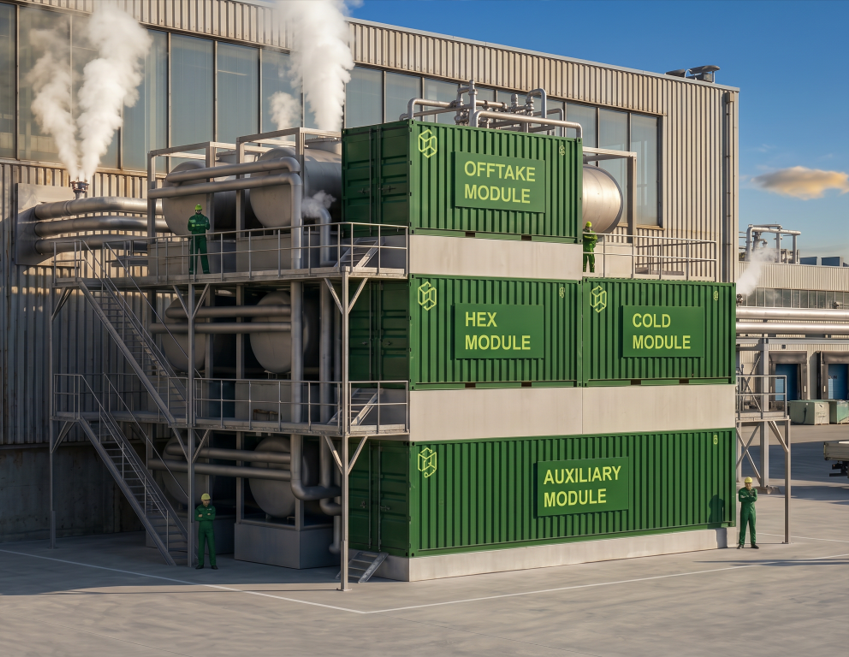
The ThermalPod uses a proven molten salt technology to store and transfer heat. Our thermal battery helps you electrify while making the most of your current grid connection, often avoiding the need for a costly upgrade. Heat output speeds up or slows down instantly to match what your factory needs, with no restrictions on the operation of your plant. The design is modular, configured for your factory, built off-site for speed, and designed to fit directly into your existing site plan.
Get more details